Antigen? Antibody? P.C.R. ? Understand Coronavirus Tests.

Reprinted with the courtesy of the New York Times. All rights reserved.

By Tariro Mzezewa


Antigen? Antibody? P.C.R. ? Understand Coronavirus Tests.

For travelers, here’s what you need to know to assure yourself and others that you aren’t spreading the virus.


For those who must travel, or those who are itching to do so, airlines and airports are increasingly offering ways to get tested for the coronavirus ahead of a trip. Taking a test can assure you and others that you aren’t spreading the virus from one place to another. In recent weeks, destinations including Hawaii, New York, Washington, D.C., and some Caribbean countries began allowing people who have tested negative for the virus and can show test results to skip mandatory 14-day quarantines, a process that some view as risky because it is possible that people can take a test, receive a negative result and then contract the virus later.


Are all coronavirus tests the same?

No. There are two categories of coronavirus test: virus test, which help determine if you have the coronavirus, and antibody tests, which detect if you have an immune response because of past exposure to the virus. If you want to find out if you currently have the coronavirus, you should plan on taking a virus test like a polymerase chain reaction or P.C.R., test. P.C.R. tests are currently considered the gold standard for tests because of their accuracy and reliability. These tests can detect an active infection and require a swab in the nose or back of the throat. Some tests use saliva. The test is highly sensitive and looks for the virus’s genetic material.

Another type of diagnostic test is an antigen test, which detects the presence of a specific viral antigen or bits of coronavirus proteins, implying current viral infection. For antigen tests, a sample is collected by nasal swabbing with hopes that there are some virus proteins in the sample. You’ve probably heard of antibody tests, too, but those aren’t what you need in order to travel. An antibody test checks for antibodies, which may tell you if you had a past infection with the virus that causes Covid-10.


Are rapid tests reliable?

Many companies have released rapid tests, which are mostly antigen tests and take minutes to return results. These tests tend to be less accurate, and false negatives could lead people to be reckless and unwittingly spread the virus, but they are fast and affordable. You can check if your airline and destination accept results from rapid antigen tests.


How do I know which test to take?

Most airlines and destinations will accept P.C.R. tests, although others might also be allowed. If you’re taking a test specifically because you are about to travel, you should first see if your destination has a list of tests that it will accept. Many places including Hawaii, Washington, D.C., New York, and a number of Caribbean countries specify which tests they will accept. If you get a test that isn’t approved, you could be forced to quarantine upon arrival, or the airline could prevent you from boarding the flight.


Where do I get a test?

Many places are offering coronavirus tests, including some hospitals, urgent care clinics, pharmacies, and doctors’ offices. Some churches and fire stations are offering testing, too. Airlines like Hawaiian Airlines, United Airlines, JetBlue, and American Airlines are offering testing at the airport or at nearby drive-through sites for passengers heading to certain destinations. Some airports have clinics in terminals. Companies including CareCube and Pixel by LabCorp will mail a test to you; after you send back a sample, they promise to send your results within 12 to 34 hours and 36 hours, respectively. JetBlue has a partnership with Vault Health for mail-in tests. It’s a good idea to start by reaching out to your doctor’s office to see what all the available options for testing are and how long it will take to get results. If you don’t have a primary care provider, a good place to start is on city and state health department websites, which outline the various testing options and locations.


I have a trip coming up. When should I take my test?

You should get a coronavirus test before you travel. Figuring out the exact time can be tricky, but you can’t wait too long to take the test because you might not get the results back in time to go on your trip. For those reason, many destinations, including France, Aruba, Bonaire, Puerto Rico, and Hawaii require that the test be taken within 72 hours of departure. Abu Dhabi and Croatia require test results within 48 hours of departure. Some airlines, like Egypt Air, allow travelers to use results from a test taken up to 96 hours before travelling, depending on where they are travelling from and to. You can walt into a testing site, but it’s a good idea to schedule an appointment and to not wait until the last minute to get the test.


How long does it take to get test results back?

It depends. If you’re taking a test because you’re getting ready to go on a trip, you should look for test providers who will get results back to you with 36 hours so that you have your results by the time you leave for your trip. Keep in mind that different tests will come with different wait times for results. Rapid tests typically return results in less than an hour, and results from P.C.R. tests tend to take a few days because samples have to be sent to a lab. There’s always a chance that your results won’t arrive in time, so try to be flexible with your travel plans.


Does insurance cover coronavirus tests?

Not all tests are covered by insurance, but since the passage of the Families First Coronavirus Response Act in March, many people should have coverage for coronavirus testing. Under the act, public and private insurance, including self-funded plans, have to cover F.D.A. -approved coronavirus tests and costs associated with diagnostic testing. Rapid tests like the ones offered at the airport on the day of travel might not be covered by many insurance companies.


What should I do if I test positive for the virus?

Stay home and isolate. Don’t travel with the virus.


DISCLAIMER

The statements and opinions expressed in this article are those of the New York Times. The information contained in this article is distributed for informational purposes only. Information contained herein has been obtained from sources believed to be reliable, but not guaranteed. TriLinc cannot guarantee the accuracy or completeness of any statements or data. The information contained in this article is accurate as of the date submitted but is subject to change.

Webinar Replay: Investing in Trade Finance

On October 15, 2020, Paul Sanford, Chief Investment Officer of TriLinc Global, and Enrico Scalvini, VP Investments, hosted an educational webinar on Investing in Trade Finance.

The webinar covered several topics, including:

  • Why trade finance is a global opportunity
  • Why changing bank regulations are affecting the flows of capital in this type of lending
  • How a typical trade finance transaction works and settles
  • How we use trade finance in our portfolio strategy
  • Risks associated with this type of lending and how we structure our transactions to help mitigate it
 
Click here to download a copy of the webinar deck.

Webinar Replay: Investing in America

On September 24, 2020,  Gloria Nelund, Founder and CEO of TriLinc Global, and Paul Sanford, Chief Investment Officer, hosted an educational webinar on Investing in America.

The webinar covered several topics, including:

  • Why TriLinc started in Emerging Markets
  • Why invest in America now, and where?
  • Compelling U.S. demand
  • Target Companies
 
Click here to download a copy of the webinar deck.

Passing the Torch: Celebrating 100 Years of HERstory

TriLinc is pleased to be a sponsor of Passing the Torch: Celebrating 100 Years of HERstory, presented by the Financial Women of San Francisco.   This short film documentary will appear live on YouTube August 26th at 6 pm PDT. The film will be available for viewing on YouTube for the rest of the year.


Passing the Torch celebrates the Centennial of the 19th Amendment and explores how women won the vote plus brings into focus the diverse trailblazing women who were “first” in so many ways. You can view this free virtual event on August 26th at 6pm PDT by:

  1. Facebook Live: https://www.facebook.com/passingthetorchsf
  2. YouTube Live: https://youtu.be/bL9yiJsknqc
  3. If you have the YouTube app on your smart TV, you can watch it on the big screen! Search “Financial Women of San Francisco Passing the Torch” in YouTube.

Fourth in a Series: COVID-19 Webinar Replay


On August 20, 2020,  Gloria Nelund, Founder and CEO of TriLinc Global, and Paul Sanford, Chief Investment Officer, hosted our fourth webinar on COVID-19 and the financial markets.

The webinar offered commentary on the coronavirus’s current and potential impacts on TriLinc’s portfolios and the financial markets, followed by a Q&A. This series serves as a complement to TriLinc’s Coronavirus Update webpage.

Click here to download a copy of the webinar deck.

ESG & Impact: Webinar Replay

On July 8, 2020,  Gloria Nelund, Founder and CEO of TriLinc Global, and Peter Greenwood, Director of ESG & Impact, hosted an educational webinar on ESG & Impact.

The webinar covered several topics, including:

  • The drivers behind the acceleration of ESG & Impact investing
  • Three sustainable and responsible investing approaches
  • The importance of the Sustainable Development Goals (SDGs)
  • TriLinc’s approach to ESG & Impact
Click here to download a copy of the webinar deck.

2019 TGSIF Sustainability & Impact Report

The TriLinc Global Sustainable Income Fund 2019 Sustainability & Impact Report provides an overview of investment activity from September 2017 to December 2019 (the “Reporting Period”), and offers evidence through numerous case studies as to how TGSIF’s small and medium enterprise (“SME”) borrower companies are helping to contribute to the economic, social, and environmental well-being of their communities.


To download a copy of the report, please click here.

TriLinc Investing in America – with new Investment Partner Enhanced Capital

MANHATTAN BEACH, Calif.–(BUSINESS WIRE)–TriLinc Global, LLC (“TriLinc”) announced today an expansion of its strategy to include lending to small business firms in underserved markets in the United States. This new strategy will be facilitated through its new Investment Partner Enhanced Capital, an impact investment firm with more than 20 years of experience helping small businesses across the United States access the capital they need to grow, thrive, and create jobs.

Since the firm’s inception in 2008, TriLinc has planned to invest in small and medium sized businesses in the U.S. and with a significant number of those businesses affected by the global pandemic, TriLinc believes the need to support them is now critical. Per the SBA, (1) in 2019 there were 30.7 million small businesses (<500 employees) in the U.S., making up 99.9% of all U. S. businesses, and annually creating 64% of all new jobs in the U.S. However, according to McKinsey (2), as of 5/13/2020, 52% of those businesses have had to shut down, lay off, or furlough employees and another 21% expected to have to take those measure in the next few months.

“Consistent with our conviction that small and medium enterprises are the major drivers of a successful economy, we believe this is the right time to add the U.S. to our strategy” commented Gloria Nelund, CEO and founder of TriLinc Global, LLC. “We are excited to be partnering with Enhanced Capital to deliver private debt capital to underserved small businesses in the U.S.”

Michael Korengold, President and CEO of Enhanced Capital said “We are honored to collaborate with TriLinc. Our mutual passion for development in underserved markets and small businesses is the key element that has bound our teams together. We agree that investing in America, as we have done over the past twenty years, is now more important than ever.”


About TriLinc Global

TriLinc Global (www.trilincglobal.com)

TriLinc Global, LLC, founded in 2008, is a private investment sponsor dedicated to launching innovative funds that increase participation in impact investing. Founded on the conviction that significant private capital is needed to help solve some of the world’s most pressing issues, TriLinc’s primary goal is to create sophisticated, institutional-quality impact investment products that will attract private capital at scale. As an impact investment company, we strive to achieve both a competitive, risk-adjusted financial return for investors as well as create positive, measurable economic, social and/or environmental impact in the communities where investments are made.


About Enhanced Capital

Enhanced Capital (www.enhancedcapital.com)

Enhanced Capital is a leader in unlocking value for private investors seeking returns through socially responsible public investment initiatives. At the forefront of aligning private sector resources with public policy goals, we transform local economies to the benefits of both investors and community stakeholders by financing local businesses, solar energy projects, and historic building restorations.


1) United States Small Business Administration February 27, 2020 – Small Business Profile for 2019 2) McKinsey May 13, 2020 “ Crushing Coronavirus Economic Uncertainty”

DISCLAIMER

This information is for general purposes only and does not represent a recommendation or offer of any particular security, strategy, or investment. There is no guarantee that TriLinc’s investment strategy will be successful or will avoid losses. TriLinc Global is dependent upon its advisors and investment partners to select investments and conduct operations. TriLinc Global is not suitable for all investors. TriLinc Global, LLC (“TLG”) is a holding company and an impact fund sponsor founded in 2008. TriLinc Advisors, LLC (“TLA”) and TriLinc Global Advisors, LLC (“TLGA”) are wholly owned subsidiaries of TLG, TLA and TLGA are SEC registered investment advisors. Securities offered through CommonGood Capital, LLC, Member FINRA/SIPC. Registration and membership do not indicate a certain level of skill, training, or endorsement by the SEC, FINRA, or SIPC.

Packaging Investment for TriLinc: Pandemic-proof Ecuadorian company receives investment

The following article was originally published by James Cutchin on the Los Angeles Business Journal website. Click here to view.


Manhattan Beach-based TriLinc Global has cleared a $3.25 million loan to a Latin American sustainable packaging company.

The new funds, set to mature in June 2025, are added to an existing five-and-a-half-year term loan program between TriLinc and the Ecuador-based packaging manufacturer.

Capital for the transaction was drawn from two of TriLinc’s four existing funds, according to the company’s Chief Investment Officer Paul Sanford.

TriLinc makes impact investments in developing markets to support businesses with a strong social benefit. The small- to medium- sized companies must meet high environmental, sustainability and governance, or ESG, criteria, as well as deliver market-rate returns.

TriLinc declined to disclose the company’s name, citing contract privacy restrictions, but said the business uses mostly recycled materials to make sustainable cardboard packaging.

“Their business really started with the boxes for bananas,” Sanford said. The company uses 97% recycled cardboard to make shipping containers for their country’s large volume of agricultural products.

Sanford said the company recycles or repurposes almost everything used on its facilities. Water used in cardboard breakdown is treated, then either reused in manufacturing, used to water plants on company property, or pumped through mister systems to keep workers cool, according to Sanford.

After no more usable material can be extracted from recycled cardboard mash, Sanford said, the company repurposes the leftovers into inexpensive portable housing components.

“There is an economic incentive to do this,” Sanford said. “They do save money. … But they’ve gone beyond that. It’s a mission statement for them.”

TriLinc’s latest investment is located in one of the countries hit hardest by Covid-19 in South America. Official Covid-19 deaths in Ecuador were just shy of 3,000 in late May, although most experts say the true number is likely much higher due to limited testing.

Despite this challenge, Sanford said his firm’s investment should be largely insulated from the turmoil. The company is one of the only makers of this type of packaging in Ecuador, according to Sanford, leaving the nation’s agricultural producers with few alternatives to transport their goods.

Because they largely service critical food suppliers, he said, there is also less likelihood that serious drops in demand will hurt the business. “We even looked at the actual ability to transport these products to their destination markets like the Port of L.A.,” Sanford added.


DISLCAIMER
The statements and opinions expressed in this article are those of The Los Angeles Business Journal. The information contained in this article is distributed for informational purposes only and should not be considered investment advice or a recommendation of any particular security, strategy, or investment product. Information contained herein has been obtained from sources believed to be reliable, but not guaranteed. TriLinc cannot guarantee the accuracy or completeness of any statements or data. The information contained in this article is accurate as of the date submitted but is subject to change.

Sustain and Gain: TriLinc Makes the Most of Socially Conscious Investing

The following article was originally published by James Cutchin on the Los Angeles Business Journal website. Click here to view.


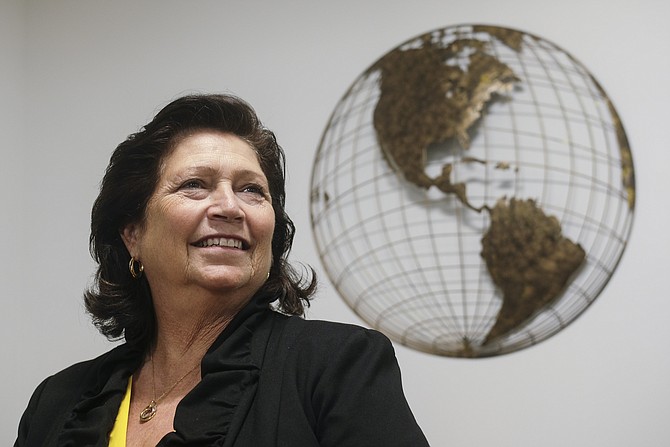
Trilinc GlobalCEO Gloria Nelund focuses on impact investments.

TriLinc Global CEO Gloria Nelund focuses on impact investments. Photo by Ringo Chiu.

Last year saw record levels for socially conscious investing, with sustainable fund assets reaching $960 billion globally in 2019 — the highest ever, according to research firm Morningstar Inc.

And early this year, the head of the world’s largest asset manager, Blackrock Inc., flagged sustainability issues as serious investment risks and said his firm would be pulling back from certain fossil fuel investments.

Then Covid-19 hit, rocking global markets and tightening or closing the flow of investment dollars to most industries. Rather than hindering the rise of sustainable investing, however, the pandemic appears to be helping to validate the sector’s staying power.

In the first quarter of 2020, global sustainable fund assets declined by 12%, compared to a drop of 18% in the overall fund universe, according to Morningstar.

Manhattan Beach-based sustainable investment firm Trilinc Global has continued to invest throughout the pandemic, including three new investments in the last month, according to founder and Chief Executive Gloria Nelund. The firm has had no loan losses to date, she said, and does not anticipate any as a result of the pandemic.

Trilinc focuses on impact investments — or investments that have a positive effect on a society or the environment — in small- to medium-sized businesses in developing countries. Nelund founded the firm more than a decade ago after noting lackluster performances at many sustainability-focused investment groups.

“They were struggling to raise funds because they were mostly philanthropy with very little real investment strategy behind it,” she said. “Investors are not willing to give up returns to do impact investing. Many can’t.”
photo

By Ringo Chiu
Los Angeles Business Journal
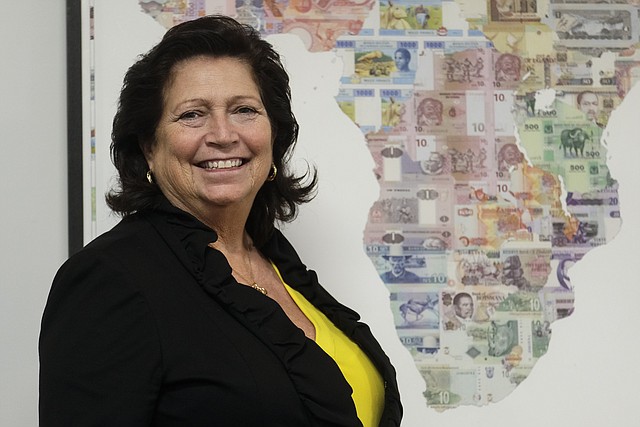
A focus on underserved markets has paid off for TriLinc during Covid-19, according to CEO Gloria Nelund.


Emerging world investing

Nelund said her firm bases all of its deals first and foremost around “a real investment opportunity” with market-rate returns. All target businesses then go through an extensive screening process for environmental, sustainability and governance, or ESG, criteria as well as an impact assessment.

The “supply-demand mismatch” in many developing economies, Nelund said, can help drive better returns — as long as investors understand realities on the ground. TriLinc partners with local investment managers to identify investment opportunities, conduct due diligence and act as asset managers.

Nelund said this focus on underserved geographies has unexpectedly paid off during Covid-19.

“One advantage to being in emerging markets is that not all have been affected in the way that more developed markets have,” she said.

Some of TriLinc’s investments are located in countries like Namibia, which has relatively little travel or tourism, low population density and poor infrastructure, which can ironically help slow the virus’ spread. Namibia had 21 confirmed Covid-19 cases and zero deaths as of May 25, according to the World Health Organization.
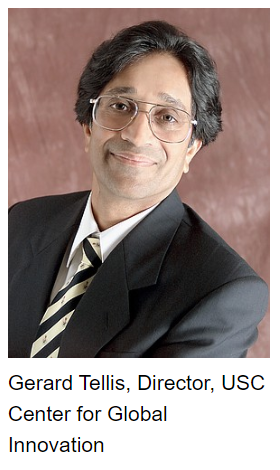
Gerard Tellis, director of the USC Center for Global Innovation, agreed that, while low-quality health care infrastructure is an undeniable disadvantage, many developing countries have factors that have helped slow or stop Covid-19’s spread and limited near-term economic damage.

Certain developed economy features — such as well-established public transportation infrastructures — have, according to Tellis, become less objective advantages in the face of the pandemic.

“That (infrastructure) is a huge mixer of population,” he said. “If it’s not hygienically treated, you could have a massive spread of disease as you saw in the New York and New Jersey areas.”

Some areas of the developing world have been harder hit by the pandemic than others. Through late May, Brazil and Mexico recorded the second- and third-highest numbers of daily coronavirus deaths. To avoid economic meltdowns, these countries have started to reopen despite growing infection and death rates.

According to Nelund, TriLinc has relatively low exposure to high-risk areas and industries. A coronavirus risk assessment her firm conducted across its portfolio found less than 3% exposure to “high-risk geographies” and less than 10% exposure to “high-risk industries.”

Those numbers may need revision if material changes occur in the global situation, although TriLinc’s high-collateral loan model could help insulate it from serious financial pain. The firm typically takes 200% of a loan’s value in collateral, according to Nelund.

“Even if companies go belly-up,” she said, “our investors typically won’t lose out.”

TriLinc is also diversifying into an entirely new market in light of the pandemic: the United States.

photo

By Ringo Chiu
Los Angeles Business Journal
TriLinc is now looking for opportunities inside the United States.


New Markets

“We have always wanted to invest in the U.S., in the lower middle market, which is where the lending gap is here,” Nelund said. “U.S. small businesses have been impacted the same as other countries, if not more.”

In early June, the company will begin investing in American companies out of one of its four funds, according to Nelund. Over time, she added, the firm plans to roll these domestic investments out across all of its funds.

The new U.S. investments will focus on similar areas to TriLinc’s international funds, Nelund said. These will include businesses in rural areas and opportunity zones, women- and minority-owned businesses, as well as those with a generally strong social impact.

TriLinc’s entry into the U.S. market is part of a larger trend among impact investors, according to Jennifer Walske, director of the UCLA Anderson School of Management’s social impact program.

“You are seeing a lot of the biggest impact funds now pivoting to focus in the U.S.,” Walske said.

She pointed to Acumen Fund Inc., one of the most influential U.S. impact funds, which was established in 2001 to invest in developing economies. In a situation analogous to the current downturn, the company began investing in the United States in the wake of the 2008 financial crisis and the massive economic hardship that event inflicted on many poor Americans.

Walske said the tendency to question whether market downturns will have an outsized negative affect on impact investing is also not new.

“The question is always, is this real or is this a fad?” she said. “Every time something like this comes up, people always ask this question.”

The UCLA professor is optimistic about the answer, even in the face of a recession.

“It will be important to watch how this plays out,” she said, “(but) if you look at the millennials and their values and priorities, I think it is here to stay.”


DISLCAIMER
The statements and opinions expressed in this article are those of The Los Angeles Business Journal. The information contained in this article is distributed for informational purposes only and should not be considered investment advice or a recommendation of any particular security, strategy, or investment product. Information contained herein has been obtained from sources believed to be reliable, but not guaranteed. TriLinc cannot guarantee the accuracy or completeness of any statements or data. The information contained in this article is accurate as of the date submitted but is subject to change.