
Sustain and Gain: TriLinc Makes the Most of Socially Conscious Investing

The following article was originally published by James Cutchin on the Los Angeles Business Journal website. Click here to view.
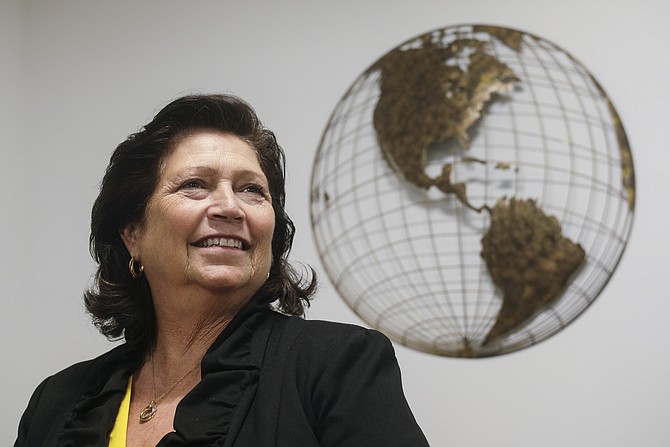

Trilinc GlobalCEO Gloria Nelund focuses on impact investments.

TriLinc Global CEO Gloria Nelund focuses on impact investments. Photo by Ringo Chiu.

Last year saw record levels for socially conscious investing, with sustainable fund assets reaching $960 billion globally in 2019 — the highest ever, according to research firm Morningstar Inc.

And early this year, the head of the world’s largest asset manager, Blackrock Inc., flagged sustainability issues as serious investment risks and said his firm would be pulling back from certain fossil fuel investments.

Then Covid-19 hit, rocking global markets and tightening or closing the flow of investment dollars to most industries. Rather than hindering the rise of sustainable investing, however, the pandemic appears to be helping to validate the sector’s staying power.

In the first quarter of 2020, global sustainable fund assets declined by 12%, compared to a drop of 18% in the overall fund universe, according to Morningstar.

Manhattan Beach-based sustainable investment firm Trilinc Global has continued to invest throughout the pandemic, including three new investments in the last month, according to founder and Chief Executive Gloria Nelund. The firm has had no loan losses to date, she said, and does not anticipate any as a result of the pandemic.

Trilinc focuses on impact investments — or investments that have a positive effect on a society or the environment — in small- to medium-sized businesses in developing countries. Nelund founded the firm more than a decade ago after noting lackluster performances at many sustainability-focused investment groups.

“They were struggling to raise funds because they were mostly philanthropy with very little real investment strategy behind it,” she said. “Investors are not willing to give up returns to do impact investing. Many can’t.”
photo

By Ringo Chiu
Los Angeles Business Journal
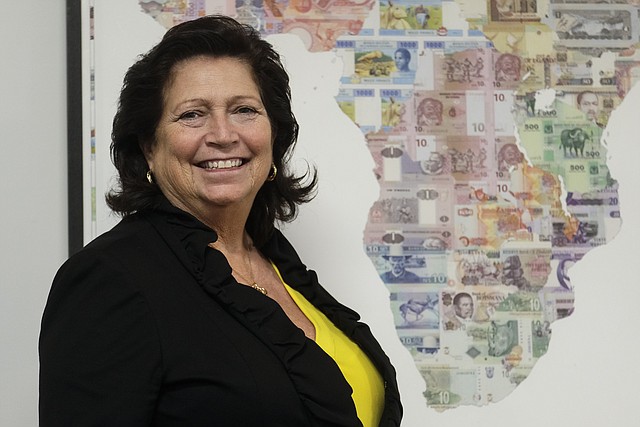
A focus on underserved markets has paid off for TriLinc during Covid-19, according to CEO Gloria Nelund.


Emerging world investing

Nelund said her firm bases all of its deals first and foremost around “a real investment opportunity” with market-rate returns. All target businesses then go through an extensive screening process for environmental, sustainability and governance, or ESG, criteria as well as an impact assessment.

The “supply-demand mismatch” in many developing economies, Nelund said, can help drive better returns — as long as investors understand realities on the ground. TriLinc partners with local investment managers to identify investment opportunities, conduct due diligence and act as asset managers.

Nelund said this focus on underserved geographies has unexpectedly paid off during Covid-19.

“One advantage to being in emerging markets is that not all have been affected in the way that more developed markets have,” she said.

Some of TriLinc’s investments are located in countries like Namibia, which has relatively little travel or tourism, low population density and poor infrastructure, which can ironically help slow the virus’ spread. Namibia had 21 confirmed Covid-19 cases and zero deaths as of May 25, according to the World Health Organization.
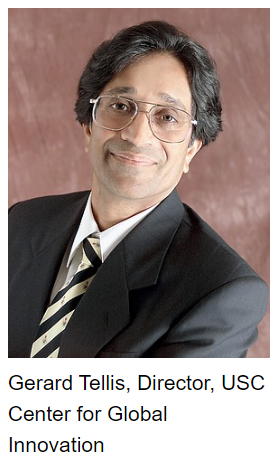
Gerard Tellis, director of the USC Center for Global Innovation, agreed that, while low-quality health care infrastructure is an undeniable disadvantage, many developing countries have factors that have helped slow or stop Covid-19’s spread and limited near-term economic damage.

Certain developed economy features — such as well-established public transportation infrastructures — have, according to Tellis, become less objective advantages in the face of the pandemic.

“That (infrastructure) is a huge mixer of population,” he said. “If it’s not hygienically treated, you could have a massive spread of disease as you saw in the New York and New Jersey areas.”

Some areas of the developing world have been harder hit by the pandemic than others. Through late May, Brazil and Mexico recorded the second- and third-highest numbers of daily coronavirus deaths. To avoid economic meltdowns, these countries have started to reopen despite growing infection and death rates.

According to Nelund, TriLinc has relatively low exposure to high-risk areas and industries. A coronavirus risk assessment her firm conducted across its portfolio found less than 3% exposure to “high-risk geographies” and less than 10% exposure to “high-risk industries.”

Those numbers may need revision if material changes occur in the global situation, although TriLinc’s high-collateral loan model could help insulate it from serious financial pain. The firm typically takes 200% of a loan’s value in collateral, according to Nelund.

“Even if companies go belly-up,” she said, “our investors typically won’t lose out.”

TriLinc is also diversifying into an entirely new market in light of the pandemic: the United States.

photo

By Ringo Chiu
Los Angeles Business Journal
TriLinc is now looking for opportunities inside the United States.


New Markets

“We have always wanted to invest in the U.S., in the lower middle market, which is where the lending gap is here,” Nelund said. “U.S. small businesses have been impacted the same as other countries, if not more.”

In early June, the company will begin investing in American companies out of one of its four funds, according to Nelund. Over time, she added, the firm plans to roll these domestic investments out across all of its funds.

The new U.S. investments will focus on similar areas to TriLinc’s international funds, Nelund said. These will include businesses in rural areas and opportunity zones, women- and minority-owned businesses, as well as those with a generally strong social impact.

TriLinc’s entry into the U.S. market is part of a larger trend among impact investors, according to Jennifer Walske, director of the UCLA Anderson School of Management’s social impact program.

“You are seeing a lot of the biggest impact funds now pivoting to focus in the U.S.,” Walske said.

She pointed to Acumen Fund Inc., one of the most influential U.S. impact funds, which was established in 2001 to invest in developing economies. In a situation analogous to the current downturn, the company began investing in the United States in the wake of the 2008 financial crisis and the massive economic hardship that event inflicted on many poor Americans.

Walske said the tendency to question whether market downturns will have an outsized negative affect on impact investing is also not new.

“The question is always, is this real or is this a fad?” she said. “Every time something like this comes up, people always ask this question.”

The UCLA professor is optimistic about the answer, even in the face of a recession.

“It will be important to watch how this plays out,” she said, “(but) if you look at the millennials and their values and priorities, I think it is here to stay.”


DISLCAIMER
The statements and opinions expressed in this article are those of The Los Angeles Business Journal. The information contained in this article is distributed for informational purposes only and should not be considered investment advice or a recommendation of any particular security, strategy, or investment product. Information contained herein has been obtained from sources believed to be reliable, but not guaranteed. TriLinc cannot guarantee the accuracy or completeness of any statements or data. The information contained in this article is accurate as of the date submitted but is subject to change.
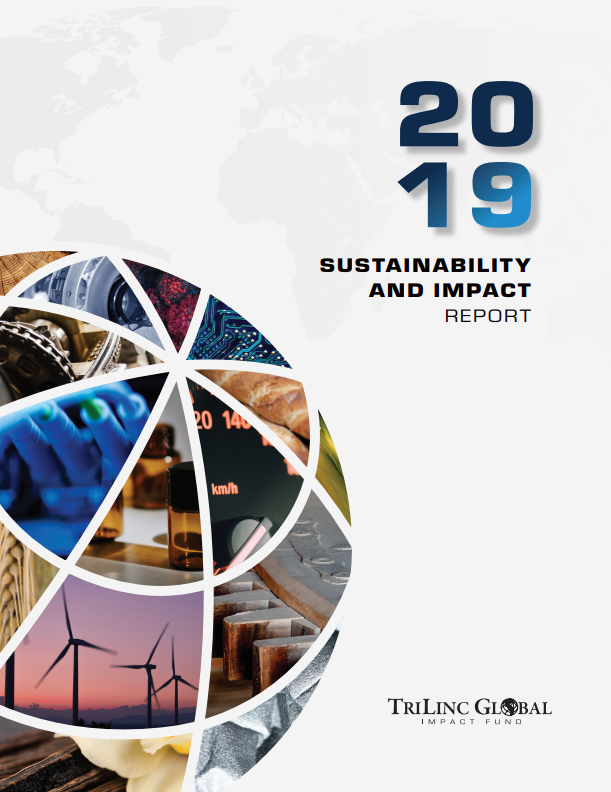
TriLinc Global Impact Fund Showcases Environmental and Social Management System in New Report

MANHATTAN BEACH, Calif.–(BUSINESS WIRE)–TriLinc Global, LLC (“TriLinc”) today published its 2019 Sustainability and Impact Report for the TriLinc Global Impact Fund, LLC. TriLinc was founded on the belief that the power of capital markets can be used to solve pressing socioeconomic and environmental challenges, and companies that employ sustainable business practices, in the long term, make better investments. TriLinc employs a disciplined environmental, social, and governance (“ESG”) screening process to assess a company’s sustainability policies and practices and mitigate potential ESG-related risks. “We enhanced our screening program in 2020 as we finalized our Environmental and Social Management System, (“ESMS”),” stated Gloria Nelund, Founder and CEO of TriLinc. “TriLinc’s ESMS incorporates our ESG assessment framework alongside our ESG due diligence, monitoring, and decision-making requirements, processes and procedures, roles, and responsibilities,” commented Nelund.

“We enhanced our screening program in 2020 as we finalized our Environmental and Social Management System, (“ESMS”).”

In addition to its ESG Program, TriLinc’s impact tracking and reporting disciplines are designed to prove that capitalism can be used as a force for good. TriLinc achieves impact in three meaningful ways: 1) through the impact objectives of the funds that TriLinc sponsors and manages; 2) through the local and global impact achieved by TriLinc borrower companies; and 3) through the personal efforts of the TriLinc team.


About TriLinc Global

TriLinc Global (www.trilincglobal.com)

TriLinc Global, LLC, founded in 2008, is a private investment sponsor dedicated to launching innovative funds that increase participation in impact investing. Founded on the conviction that significant private capital is needed to help solve some of the world’s most pressing issues, TriLinc’s primary goal is to create sophisticated, institutional-quality impact investment products that will attract private capital at scale. As an impact investing company, we strive to achieve both a competitive, risk-adjusted financial return for investors as well as create positive, measurable economic, social and/or environmental impact in the communities where investments are made.


DISCLAIMER

This information is for general purposes only and does not represent a recommendation or offer of any particular security, strategy, or investment. There is no guarantee that TriLinc’s investment strategy will be successful or will avoid losses. Investment in a pooled investment vehicle involves significant risk including but not limited to: units are restricted; no secondary markets; limitation on liquidity; transfer and redemption of units’ distribution made may not come from income and if so will reduce the returns; are not guaranteed and are subject to board discretion. TriLinc is not suitable for all investors. TriLinc Global, LLC (“TLG”) is a holding company and an impact fund sponsor founded in 2008. TriLinc Advisors, LLC (“TLA”) and TriLinc Global Advisors, LLC (“TLGA”) are wholly owned subsidiaries of TLG and are SEC registered investment advisors. Securities offered through CommonGood Securities, LLC, Member FINR/SIPC. Regulation and membership do not indicate a certain level of skill, training, or endorsement by the SEC, FINRA, or SIPC.

Contacts

Robert Kronman – Director of Marketing
rkronman@trilincglobal.com
(o) 424 200 6202
(c) 310 497 2116

Third in a Series: COVID-19 Webinar Replay


On May 6, 2020,  Gloria Nelund, Founder and CEO of TriLinc Global, and Paul Sanford, Chief Investment Officer, hosted our third webinar on COVID-19 and the financial markets.

The webinar offered commentary on the coronavirus’s current and potential impacts on TriLinc’s portfolios and the financial markets, followed by a Q&A. This series serves as a complement to TriLinc’s Coronavirus Update webpage.

Click here to download a copy of the webinar deck.

2019 TGIF Sustainability & Impact Report

The TriLinc Global Impact Fund 2019 Sustainability & Impact Report provides an overview of investment activity from June 2013 to December 2019 (the “Reporting Period”), and offers evidence through numerous case studies as to how TGIF’s small and medium enterprise (“SME”) borrower companies are helping to contribute to the economic, social, and environmental well-being of their communities.
 

To download a copy of the report, please click here.

TriLinc Global Becomes Signatory to the IFC’s Impact Principles

MANHATTAN BEACH, Calif.–(BUSINESS WIRE)–TriLinc Global, LLC (“TriLinc”) joined leading impact asset owners and asset managers to become a signatory to the International Finance Corporation’s “Operating Principles for Impact Management”. The operating principles provide greater discipline, standardization, and transparency in impact management and measurement throughout the investment lifecycle. They are intended to foster increased mobilization of capital for impact and provide a high standard for the social and environmental impact within impact investing.

“We are honored to be a signatory to the operating principles launched by the World Bank Group’s International Finance Corporation,” commented Gloria Nelund, CEO and Founder of TriLinc Global, LLC.

“These principles support our mission to harness the power of capital markets in solving global challenges facing our society.”


About TriLinc Global

TriLinc Global (www.trilincglobal.com)

TriLinc Global is an impact investing fund sponsor with a mission to link market-rate returns, positive impact, and scalable solutions. Through its registered investment advisor subsidiaries, TriLinc Global has invested over $1 billion in private debt globally and seeks to demonstrate the power of the capital markets in helping solve some of the world’s pressing socioeconomic and environmental challenges. TriLinc Global funds provide growth-stage loans and trade finance to established and small and medium enterprises (“SMEs”) in select developing economies where access to affordable capital is limited. Borrower companies must demonstrate the ability to pay market rates, pass TriLinc Global’s environmental, social, and governance (ESG) screens, and commit to tracking and reporting on self-identified impact metrics.

TriLinc Global complements its global macroeconomic portfolio organization and management with investment services from experienced investment partners that have established track records in target asset-classes and geographies, and access to a high-quality investment pipeline.


About the International Finance Corporation

International Finance Corporation (www.ifc.org)

The IFC is a member of the World Bank Group and is headquartered in Washington D.C. It was established in 1956 as the private-sector arm of the World Bank Group to advance economic development by investing in for-profit and commercial projects for poverty reduction and promoting development. By giving loans and offering advice and training in both the private and public sectors, the IFC aims to eliminate poverty by helping people help themselves. The IFC serves two mandates: to end extreme poverty, by reducing the share of the global population that lives in extreme poverty to 3% by 2030, and to promote shared prosperity, by increasing the incomes of the poorest 40% of people in every country.


DISCLAIMER

This information is for general purposes only and does not represent a recommendation or offer of any particular security, strategy, or investment. Amount invested represents current amount financed in term loans, trade finance, and short-term notes since 2013. There is no guarantee that TriLinc’s investment strategy will be successful or will avoid losses. Investment in a pooled investment vehicle involves significant risk including but not limited to: units are restricted; no secondary markets; limitation on liquidity; transfer and redemption of units’ distribution made many not come from income, and if so will reduce the returns; are not guaranteed and are subject to board discretion. TriLinc Global is dependent upon its advisors and investment partners to select investments and conduct operations. TriLinc Global is not suitable for all investors. TriLinc Global, LLC (“TLG”) is a holding company and an impact fund sponsor founded in 2008. TriLinc Advisors, LLC (“TLA”) and TriLinc Global Advisors, LLC (“TLGA”) are wholly owned subsidiaries of TLG. TLA and TLGA are SEC registered investment advisors. Securities offered through CommonGood Capital, LLC, Member FINRA/SIPC. Registration and memberships do not indicate a certain level of skill, training, or endorsement by the SEC, FINRA, or SIPC.

Second in a Series: COVID-19 Webinar Replay


On April 16, 2020,  Gloria Nelund, Founder and CEO of TriLinc Global, and Paul Sanford, Chief Investment Officer, hosted our second webinar on COVID-19 and the financial markets.

The webinar offered commentary on the coronavirus’s current and potential impacts on TriLinc’s portfolios and the financial markets, followed by a Q&A. This series serves as a complement to TriLinc’s Coronavirus Update webpage.

Click here to download a copy of the webinar deck.

First in a Series: COVID-19 Webinar Replay


On March 26, 2020,  Gloria Nelund, Founder and CEO of TriLinc Global, and Paul Sanford, Chief Investment Officer, hosted a webinar on COVID-19 and the financial markets.

The webinar offered commentary on the coronavirus’s current and potential impacts on TriLinc’s portfolios and the financial markets, followed by a Q&A. This webinar serves as a complement to TriLinc’s Coronavirus Update webpage.

Click here to download a copy of the webinar deck.

Emerging Markets Private Credit: Why Now? Webinar Replay

On February 20, 2020,  Gloria Nelund, Founder and CEO of TriLinc Global, and Paul Sanford, Chief Investment Officer, hosted an educational webinar – Emerging Markets Private Credit: Why Now?

The webinar covered several topics, including:

  • The Case for Emerging Markets
  • Why Private Assets in Emerging Markets?
  • Diversification
  • Opportunities for Impact
  • Why Now?
Click here to download a copy of the webinar deck.

GIIN Releases New Report: The State of Impact Measurement and Management Practice

The Global Impact Investing Network has just published the Second Edition of The State of Impact Measurement and Management (IMM) Practice. Based on data from 278 impact investors, it provides the most comprehensive view of how impact investors measure their social and environmental impact. It also analyzes trends and changes in IMM practice over the past two years, looking at data from 109 two-year repeat respondents. The report indicates that impact investors universally agree on the importance of measuring and managing their impact as an industry imperative and are growing increasingly sophisticated at IMM, shifting their focus towards driving greater impact results.

Learn about the state of IMM practice here.


About the GIIN

The Global Impact Investing Network (GIIN) is the global champion of impact investing, dedicated to increasing its scale and effectiveness around the world. Impact investments are investments made into companies, organizations, and funds with the intention to generate positive, measurable social and environmental impact alongside a financial return. Impact investments can be made in both emerging and developed markets and target a range of returns from below market to market rate, depending upon the circumstances. The GIIN builds critical infrastructure and supports activities, education, and research that help accelerate the development of a coherent impact investing industry. For more information, please visit https://thegiin.org/.


DISCLAIMER

The information contained in this report is distributed for informational purposes only and should not be considered investment advice or a recommendation of any particular security, strategy or investment product. Information contained herein has been obtained from sources believed to be reliable, but not guaranteed. TriLinc cannot guarantee the accuracy or completeness of any statements or data. The information contained in this report is accurate as of the data submitted but is subject to change.

How To Invest In Companies That Pay Employees Well, Clean Up The Environment, And Care About The Future

The following article was originally published by Dustin Clendenen on the Business Insider website. Click here to view.


  • The impact investing market has grown to over $500 billion, making it a mainstream way to diversify your investment portfolio.
  • Many companies have sprouted up in the past decade focusing solely on impact investing, such as TriLinc Global, CleanFund, and SustainVC.
  • However, mainstream legacy brokers like E*TRADE, Charles Schwab, and even BlackRock have taken up the torch to offer their own impact investing solutions.
  • Wealthsimple and Ellevest are two robo-advisers that can help you get started in impact investing »

Money is speech. On some level you know this. It’s why the meme, “Shut up and take my money” resonates with so many people. The phrase is a way of saying you love something — and you eagerly relinquish your cash in reverence.

Wall Street makes a statement about its values every time it invests in companies that focus more on the bottom line than they do on human rights or sustainability.

But consumers are becoming more and more interested in socially conscious businesses — businesses that pay employees well, don’t pollute and even actively clean up the environment, and that operate with a sustainable future in mind. And more and more, the financial sector is starting to care as well.


What is impact investing?

Donating to charity isn’t the only way your money can make the world a better place. According to the Global Impact Investing Network, impact investments are “investments made with the intention to generate positive, measurable social and environmental impact alongside a financial return.” By the end of 2018, the global market for impact investing had grown to over $500 billion.

When you invest for impact, it means you buy shares in a company that’s designed to have a positive effect on society.

These companies have a “double bottom line,” focused both on turning a financial profit and making a measurable, positive impact on a social need in the process. This could be through generating renewable energy, making only eco-friendly and sustainably produced products, or financially empowering workers in emerging economies.

Social impact companies are incredibly diverse. Thrive Market, an e-commerce site focused entirely on organic and sustainable groceries, falls into the social impact category, but so does Watsi, an app for crowdfunding healthcare, and The Ocean Cleanup, an enterprise dedicated to developing techniques and technology that can rid the ocean of plastic waste.

Impact investing is still an emerging field with kinks being worked out by the industry, but so far, the majority of returns (both financially and socially) on these investments meet or exceed investor expectations. In other words, it’s safe and profitable for you to invest in social impact.


How to get started with impact investing

If you’re even researching how to get involved in impact investing, you probably already know what causes you want to fight for and what social issues you want to see solved.

Whatever your cause is, there are companies out there doing amazing work, and many of them are publicly traded.

If you hear about a new social enterprise in the news that catches your attention, chances are the reason it’s making headlines is because it’s doing a round of funding. Do some digging and see if would be possible for you to contribute.

If you don’t have the time or confidence to vet companies that are both genuinely making a difference and worthy of your investment, there are also more managed and robo funds than ever to utilize, many with options to invest your dollars directly into the causes you cherish.


Where to put your money

A number of companies have been established in the last decade that focus solely on impact and socially conscious investing.

Based in California, CleanFund has become a leader in providing long-term financing for residential and commercial property improvements that increase energy efficiency, water conservation, and renewable energy compatibility.

TriLinc Global has provided a vehicle for investors to fund social enterprises in markets all around the world, in alignment with the UN’s Sustainable Development Goals.

Bamboo Capital Partners offers an incredibly diverse array of companies in its portfolio that span energy, healthcare, housing, financial inclusion, and education.

Sustain VC invests seed money in early-stage, high-impact companies and continues to actively engage with them throughout their growth and development, almost like an incubator.

The $500 billion impact-investing market has grown so influential that even the major legacy funds and financial institutions have gotten involved.

E*TRADE prominently features options for socially conscious investments in every one of its portfolio options.

Charles Schwab offers clients a list of socially conscious ESG funds available from third-party providers, which allow them to invest in companies based on causes such as environmental sustainability, social justice, and ethical governance (avoiding problematic lobbying and concerns of that nature).

Wealthsimple provides hands-on tools for conscious investors to build their own socially responsible indexes, focusing on issues like reducing carbon and supporting clean tech, plus areas like local initiatives and endeavors to provide affordable housing.

Ellevest offers an impact investing portfolio that focuses on companies that actually advance women: as business owners, as community leaders, and as social entrepreneurs on the frontline of the fight against climate change.

TD Ameritrade now offers a range of “socially aware portfolios” that allow users to custom-tailor their investments to their values.

Even BlackRock has joined in on the action, creating funds and investment vehicles that align with well-recognized social impact goals, such as advancing the UN’s Sustainable Development Goals and reducing carbon footprint.

Options for impact investing are now so prolific that you don’t even have to have a cause you support to justify social responsibility — it’s now a mainstream way to diversify your portfolio.


Disclosure from Business Insider: This post is brought to you by the Personal Finance Insider team. We occasionally highlight financial products and services that can help you make smarter decisions with your money. We do not give investment advice or encourage you to adopt a certain investment strategy. What you decide to do with your money is up to you. If you take action based on one of our recommendations, we get a small share of the revenue from our commerce partners. This does not influence whether we feature a financial product or service. We operate independently from our advertising sales team.

Disclosure from TriLinc Global: This article contains the current, good faith opinions of the author but not necessarily those of TriLinc Global, LLC and its subsidiaries (“TriLinc”). The information contained in this article is distributed for informational purposes only and should not be considered investment advice or a recommendation of any particular security, strategy or investment product. Information contained herein has been obtained from sources believed to be reliable, but not guaranteed.