
Click to View: 2017 TriLinc Global Sustainability & Impact Report
TriLinc is pleased to honor and celebrate International Women’s Day today March 8th, and every day, through its fund-level and borrower company-level activities. We are proud to be a female-founded, female-led, and 51% Female owned firm.
According to a McKinsey study, if women play an identical role in labor markets to men’s, as much as $28 trillion could be added to global annual GDP in 2025 – a 26 percent increase. To raise awareness for gender equality, TriLinc tracks at the borrower level its portfolio companies’ female employment numbers and their policies and practices related to fair recruiting, maternal leave, and equality and empowerment.
At TriLinc we believe that better data on women business owners and employees will help governments establish more enabling policies, and assist the private sector in meeting women’s unique financing needs and workplace objectives. That’s why we focus on the UN Sustainability and Development Goals (SDG) number 5, Gender Equality, and SDG number 8, Decent Work and Economic Growth. We believe tracking borrower company data related to female ownership and employees, as well as policies such as Fair Hiring& Recruitment, Fair Career Advancement, Fair Compensation, Maternity and Paternity Leave, Child Care Support and Anti-Sexual Harassment, TriLinc seeks positive, measurable impact alongside market-rate financial returns to foster a more equitable society.
TriLinc’s mission promotes job creation through financing small and medium enterprises (SMEs), which are a proven engine for employment and GDP growth in select developing economies where access to capital is significantly limited. To raise awareness for gender equality, TriLinc tracks at the borrower level its portfolio companies’ female employment numbers and their policies and practices related to fair recruiting, maternal leave, and equality and empowerment.
Help us spread awareness for female-led and female-focused investments with #InvestWithHer on LinkedIn and Twitter.
Lean how TriLinc aligns with the UN SDGs, go to: https://www.trilincglobal.com/sustainable-development-goals-commentary/
For information on International Women’s Day, go to: https://www.internationalwomensday.com/
Gloria Nelund cofounded TriLinc Global after serving as CEO of the U.S. Private Wealth Management Division at Deutsche Bank. TriLinc is set out to prove that profit and purpose go hand in hand.
Nelund retired at 44 and went into her “wilderness journey.” At one point she was a volunteer teacher for at-risk youth in the Los Angeles Unified School District. She spoke with impactmania about how one person, a man like her father, can impact thousands of people and how she decided to be in finance as a source of good.
How do you respond to market perception, where even professional investors are looking at impact investments and saying that they generate no or low financial returns?
It’s one of the reasons I started TriLinc Global. It was to prove to investors that they don’t have to give up the investment return to do good. If an impact investment is a real investment, then investment managers should be following the same investment discipline that they would for any investment in that asset class.
We believe that there are a number of funds that are impact funds that are probably not market rate. They focus more on promoting the impact. But we know there are a number of funds, including our own, that generate both a market rate return and positive impact. They’re not mutually exclusive, or they don’t need to be.
One of the things that we tried to do in the industry is work with other firms … to help define and promote the idea that investment discipline is just as important as measuring and monitoring and reporting the impact.
Could you provide an example of how you measure non-financial returns?
We ask all of our borrower companies to identify the impact that they intend to have. One of the requirements for getting money from us is that you have to be a good financial investment, and meet our investment criteria.
The second is that you have to be a sustainable company. They have to meet our environmental, social, and government screens, which really speaks more to the policies and practices of the company — how they run their company.
Then, third, we require them to have intent to create a positive measurable impact in their community. We let them self-identify what that impact is. Agriculture productivity is a positive impact that a company can have.
There are IRIS metrics [designed to measure the social, environmental, and financial performance of an investment] associated with agriculture productivity.
Once they’ve told us, for example, “We’d like to improve the energy efficiency of the farming practice,” then we go in and do a baseline assessment to say, “Okay, where are you today?”
Then we reassess. We then track, measure, monitor, and report out that impact to investors. We hold them accountable to achieving positive impact.
Are there certain industries that are better suited for impact than others?
We have seen impact across the board. We believe that any company, regardless of what they do, can have a positive impact in their community. It’s really more about their intent, and their ability to achieve that impact. The company doesn’t necessarily have to have a social mission to achieve great positive impact in a community.
We have a mine-remediation company in South Africa. Mine remediation itself may not be impactful. Their business model is that they’ll buy the land and they actually get the tailings; let’s say it’s precious metal. There are leftovers that aren’t worth mining, piles of dirt that have these things called tailings in them. This company has a process for extracting those tailings. Then they sell the tailings.
When they get through extracting all of the tailings, which is also cleaning up the land, they remediate the land, and in this case, they are donating it actually to a group that is going to build low-income houses.
Investors often say, “When I invest, I need to focus on maximizing financial returns. If I want to do good, I’ll just write a check and I’ll make a donation.” What is your response to that?
It’s interesting because I hear that all the time. Even when I was running Deutsche Bank’s Special Loans Management Department, it was surprising to me how even wealthy people separate those two thoughts in their mind. Basically everybody has two buckets. They have their investment bucket and their philanthropy bucket. Anything that they believe is concessionary — I’m not going to get the market return for that asset class — goes in their philanthropy bucket. It is very bifurcated.
High-net-worth investors typically with their whole portfolio are trying to maintain their lifestyle. Whereas retail investors in the U.S., they just want to make sure they don’t outlive their money. They can’t afford to lose any money.
A retail investor’s perspective is going to be even stronger as it relates to impact because if they believe that it’s concessionary, they can’t afford to do it. They really can’t afford to give up investment return. They might outlive their money. Retail investors typically haven’t had the opportunity, until recently.
With the trillions of dollars changing hands from one generation to another, are you seeing the next generation investing it more wisely?
This next generation of investors, because they really do care about changing the world, will get more behind it: number one because they care, but two, if we can really prove that there isn’t a trade off…
I sincerely believe that you don’t have to give up investment return to do it. Impact investments should target achieving a market return.
Our goal is to have more companies like ours who believe that it’s all about accountability and transparency and having the same discipline on the impact side that you have on the investment side. We hope to drive the industry towards that objective.
We believe we can get more people behind it even now.
You retired at age 44 from serving as the CEO of the Private Wealth Management Division at Deutsche Bank. Then you went into a couple of years of what you call “wilderness journey.” What advice do you have for people in this phase?
Take the time to experience that journey, find out what your calling is and what’s really important.
For me, through that journey, I realized that this really was my calling, It’s what I love and was really good at doing. It was about adapting the career that I loved in a way that also allowed me to have a positive impact.
I was personally missing that self-fulfillment of being, having some positive impact in the world and doing something good.
I went to volunteer for a number of organizations and realized, “Wow, this is not for me.” I so much more appreciated the people who do those things. I also realized it was harder on them having me there. I have passion about solving the problem. But I realized my contribution was supposed to come differently.
What did you learn from being a volunteer teacher of at-risk youth at the Los Angeles Unified School District?
Wow, I would say the biggest “aha!” came for me when I [realized] that we all can relate to each other on a very personal and emotional level, if we truly allow ourselves to be vulnerable and look for ways that we can relate as opposed to looking at how we’re different.
I probably learned as much in those years teaching these kids as I could have ever taught them. They have lives that none of us could even imagine. Yet they still need the same thought processes, problem-solving skills, encouragement, and ability to know how to act outside of their situation. They still need all that same stuff — or they’ll always be in it.
It was amazing; they’re just amazing people.
Who is one of your favorite impact makers — someone who left an imprint on your professional DNA?
Probably the person who got me really thinking a different way was Muhammad Yunus [a Bangladeshi social entrepreneur and banker who was awarded the Nobel Peace Prize for pioneering the concepts of microcredit and microfinance]. I got involved in microfinance, as it was getting a lot of notoriety back in the late ’90s. Yunus talked about using business as a force for good. … He spoke of people wanting to … take responsibility for their lives.
It all just made so much sense to me. I applied it differently. I didn’t do it in the microfinance space. It certainly was one of those things that got me thinking differently; realizing that you could use capitalism to solve problems, not just to make money.
Was it something you read, or did Yunus speak somewhere?
When I was at Deutsche Bank, he came and spoke to us. Deutsche Bank was very involved, early on at least, in our foundation. … It’s the first time I ever heard about microfinance really.
And directly from Yunus — that’s great.
Exactly. Then, I started researching it on my own. The Women’s World Banking Group did some events. Eventually, I was able to see it more in practice.
And then, this really did help shape me, even TriLinc: My father [Mac McMonagle] was a small businessman as I was growing up in my career. He started a number of businesses and grew them very successfully. I didn’t realize it until much later in my life that — watching my father and how he grew his businesses and how he treated employees, community members, suppliers, and customers — everybody was part of our family, and he was very ethical. When he would have a success, he would do something to give back to the community. As a result, whenever he started a new business, everybody supported him.
It was interesting because there was a time in my career when I was investing and I looked at it and was like, “Well of course; companies that do good things ultimately are going to perform better.”
Watching my dad and how he treated people certainly had a big impact on what I viewed as possible. It has shaped what we do at TriLinc.
He was a great person. He passed away a couple years ago; even then it was evident that just one person can have such an impact. We had thousands of people at the funeral.
What is one word that would describe your journey so far?
Let me think about that… interesting…
That’s the word?
That’s the word. It’s funny because the first word that came to mind was fun. I was surprised that that came to mind. I would say the majority of the time it’s fun.
I’ll take it: fun with some interesting in between.
Yes, fun with interesting in between. [Laughs.]
Prior to co-founding TriLinc, Gloria Nelund held fiduciary responsibility for more than $50 billion in investment assets. In addition to her role as divisional CEO, she served as the only female member of the Global Private Wealth Management Executive Committee.
Melissa Walker interviewed Monica Yunus. The daughter of Nobel Peace Prize winner Muhammad Yunus, one of Gloria Nelund’s impact makers.
The Millennial generation is set to receive the reins as the US undertakes the greatest generation-to-generation wealth transfer to date. The Millennial generation- those born between the early 1980s and the early 2000s- has a different take on the primary role of business compared to previous generations. As presented in the WEF report From the Margins to the Mainstream, “in a recent study of 5,000 Millennials across 18 countries, respondents ranked ‘to improve society’ as the number one priority of business [36% of survey respondents]. This does not imply that the next generation of investors will not seek market returns [35% of survey respondents]. However, the emerging generation of investors is likely to seek achievement of social objectives in addition to financial returns.”
The Millennial generation also has a larger propensity to donate time, money and work than previous generations. Here are some figures from the Millennial Impact Report conducted by Achieve:
The 75 million Millennials are positioned to become the wealthiest generation ever.
The research is clear: Millennials are generous but also very conscientious of whom and where their money is going. Millennials are understandably skeptical of the investments they make. In “Leading Generation Y,” Lieutenant Colonel Jill M. Newman of the United States Army argues, “The [Millennials] have witnessed more scamming, cheating lying and exploiting than ever before from major figures especially in finance in recent years.” The skeptical nature of this generation requires greater transparency on the part of financial sector organizations to attract this demographic.
Deloitte states that the 75 million Millennials are positioned to become the wealthiest generation ever, surpassing the 80 million Baby Boomers. “From the Margins to the Mainstreams” projects “over the next 40 years, an estimated US$ 41 trillion will be transferred” from Baby Boomers to their heirs, resulting in a powerful Millennial generation. The Millennials’ beliefs and values will be the drivers behind the world’s political, social, environmental and economic changes.
Impact Investing is turning out to be an appealing investment approach for Millennials due to its differing outcomes and operations than those of traditional investing. Impact Investing provides a new way of tackling the world’s most pressing issues while still providing an acceptable financial return. It also enables investors to place their money according to their values without having to forgo financial opportunities. While impact investments may currently represent a small portion of many adults’ portfolios, JP Morgan forecasts a drastic increase in these types of investments as money changes hands on a generational scale. They estimate that impact investing may expand from about $9 billion today to $1 trillion by 2020.
Many companies have sought out to democratize impact investing, in anticipation of the growing popularity. No longer are accredited investors the only investors offered a slice of the impact investing pie. With the introduction of new retail offerings, non-accredited investors, like many Millennials, have been given the opportunity to invest in corporations and businesses that share their values through impact investing.
This generous, yet monetarily wise generation will find ways to advocate for social and environmental missions, while still maintaining financial responsibility. Of course it’s only speculation, but it would seem that impact investing is an investment approach that is in line with Millennials. Demand creates supply. With this evidence the future for impact investing looks promising. Impact investing and Millennials go hand in hand.
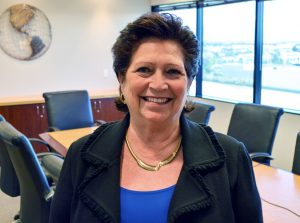
Gloria Nelund founded TriLinc after a rewarding career in the international asset management industry. She is responsible for leading the Company’s high level strategy and directing its growth since its founding in 2008. Gloria brings to TriLinc more than 30 years of experience in executive management of multi-billion dollar financial institutions, as well as deep expertise in the creation, sales and distribution of investment products.
Most recently, Gloria was the CEO of the U.S. Private Wealth Management Division at Deutsche Bank, the world’s fifth largest financial institution. In this capacity, she held fiduciary responsibility for more than $50 billion in investment assets, including more than $20 billion in emerging markets and credit instruments. In addition to her role as divisional CEO, Gloria served as the only female member of the Global Private Wealth Management Executive Committee.
Gloria has been a pioneer in the development of social impact products. She was instrumental in making Deutsche Bank a leading institutional supporter of microcredit, creating multiple programs to help Private Wealth Management clients learn about and invest in the sector. Gloria also served on the Board of the Deutsche Bank Americas Community Development Group, with responsibility for providing loans, investments and grants to targeted organizations throughout the U.S. and Latin America. Gloria also was the Managing Director of Scudder Kemper Investments prior to its purchase by Deutsche Bank. While at Scudder, she supported the development and growth of one of the industry’s first socially-responsible investment (SRI) products.
Prior to her tenure at Deutsche Bank, Gloria spent 16 years as an executive at Bank of America/Security Pacific Bank, most notably as President and CEO of BofA Capital Management, Inc., an investment management subsidiary managing $35 billion in assets for both retail and institutional investors. In addition to managing fixed-income and equity mutual funds in the U.S. and internationally, Gloria’s division was responsible for managing assets on behalf of public funds, common trust funds and corporate funds.
In addition to her activities with TriLinc, Gloria is an Independent Trustee of the Victory Funds, a mutual fund complex with more than $32.9 billion in assets under management. She is a life-long supporter of development-oriented philanthropic causes. She has volunteered as a teacher of at-risk youth in the Los Angeles Unified School District and the YMCA of Los Angeles. Gloria currently sits on the board of multiple not-for-profit organizations and actively supports entrepreneurship research and education. She is an active speaker and guest lecturer on Impact Investing at conferences and several top business schools, including Columbia, Georgetown, Wheaton, Kellogg, Stanford and MIT.
ESG is a growing trend in the investment world, but only 1% of assets under management use ESG as a primary factor in investment considerations. What exactly does ESG mean and how are companies integrating this practice?
The acronym itself stands for Environmental, Social and Governance. Companies use ESG as a risk assessment strategy incorporated into both their investment decision-making and risk management processes. These factors are often clear indicators of a responsible, well-governed company. Examples of ESG are:
Company Activity:
Positive Outcomes:
Company Activity:
Positive Outcomes:
Company Activity:
Positive Outcomes:
ESG standards are becoming a larger part of the alternative investment world, including the impact investment space. ESG issues are not only central to measuring the sustainability and non-financial impacts of an investment, but can have a material impact on the long-term risk and return profile of investment portfolios.
According to oekom’s Sustainability Financial Performance Research Study, investors receive a “double dividend” in the form of a better rate of return with lower risk. The study found that companies that incorporate ESG standards prove to be more conscientious, less risky and therefore more likely to succeed in the long run. Socially responsible investors use ESG screens as a tool to confirm that investments are in compliance with local laws, as well as committed to sustainable and ethical business practices.
Firms like Blackrock and Vanguard have not only incorporated ESG into their compliance and legal risk-mitigation strategies, but also into their investment strategies. Traditional investments like public equity, however, are not the only investments being screened with ESG factor. Investors in alternatives, and alternatives fund managers, are likewise using the ESG framework for assessing risk in the investment decision-making process.
The board of Wellington Management, an investment management firm based in Boston, explained their motivation for using ESG, “ ESG integration is simple: to increase financial returns while upholding the fiduciary duty to incorporate any known risks into the investment process.”
ESG standards provide another level of due diligence, which is in the best interest of shareholders. When the UN launched UNPRI in 2006 and watchdogs like Bloomberg and MSCI started tracking ESG, it became abundantly clear that this was not a short lived fad.
ESG weeds out unsustainable companies with outdated practices and harmful side effects, while also minimizing risk for investors as they invest in more responsible companies with a greater likelihood of succeeding in the long run.
Small and medium sized enterprises (“SMEs”), also known as middle market companies, are generally considered economic engines of the world economy – catalysts for creating jobs, drivers of economic growth and a vital component of global trade.
TriLinc believes providing financing to SMEs in select developing economies can be both a profitable investment proposition and an effective driver of sustainable economic development.
The Millennial generation is set to receive the reins as the US undertakes the greatest generation-to-generation wealth transfer to date. The Millennial generation? those born between the early 1980s and the early 2000s? has a different take on the primary role of business compared to previous generations. As presented in the WEF report From the Margins to the Mainstream, “in a recent study of 5,000 Millennials across 18 countries, respondents ranked ‘to improve society’ as the number one priority of business [36% of survey respondents]. This does not imply that the next generation of investors will not seek market returns [35% of survey respondents]. However, the emerging generation of investors is likely to seek achievement of social objectives in addition to financial returns.”
The Millennial generation also has a larger propensity to donate time, money and work than previous generations. Here are some figures from the Millennial Impact Report conducted by Achieve:
The research is clear: Millennials are generous but also very conscientious of whom and where their money is going. Millennials are understandably skeptical of the investments they make. In “Leading Generation Y,” Lieutenant Colonel Jill M. Newman of the United States Army argues, “The [Millennials] have witnessed more scamming, cheating lying and exploiting than ever before from major figures especially in finance in recent years.” The skeptical nature of this generation requires greater transparency on the part of financial sector organizations to attract this demographic.
The Deloitte report Catalysts for Change states that the 75 million Millennials are positioned to become the wealthiest generation ever, surpassing the 80 million Baby Boomers. “From the Margins to the Mainstreams” projects “over the next 40 years, an estimated US$ 41 trillion will be transferred” from Baby Boomers to their heirs, resulting in a powerful Millennial generation. The Millennials’ beliefs and values will be the drivers behind the world’s political, social, environmental and economic changes.
Impact Investing is turning out to be an appealing investment approach for Millennials due to its differing outcomes and operations than those of traditional investing. Impact Investing provides a new way of tackling the world’s most pressing issues while still providing an acceptable financial return. It also enables investors to place their money according to their values without having to forgo financial opportunities. While impact investments may currently represent a small portion of many adults’ portfolios, JP Morgan forecasts a drastic increase in these types of investments as money changes hands on a generational scale. They estimate that impact investing may expand from about $9 billion today to $1 trillion by 2020.
Many companies have sought out to democratize impact investing, in anticipation of the growing popularity. No longer are accredited investors the only investors offered a slice of the impact investing pie. With the introduction of new retail offerings, non-accredited investors, like many Millennials, have been given the opportunity to invest in corporations and businesses that share their values through impact investing.
This generous, yet monetarily wise generation will find ways to advocate for social and environmental missions, while still maintaining financial responsibility. Of course it’s only speculation, but it would seem that impact investing is an investment approach that is in line with Millennials. Demand creates supply. With this evidence the future for impact investing looks promising. Impact investing and Millennials go hand in hand.
Joan Trant, Managing Partner at TriLinc Global, LLC, led a session during the Aspen Network of Development Entrepreneurs (ANDE) Orientation Training event which took place on June 13, 2017 in New York City. Joan is a member of TriLinc’s Executive Management team, serves on the company’s Investment Committee and Sustainability and Impact Committee, and is a thought leader, keynote speaker, and long-time practitioner in the impact investing industry. TriLinc Global is an impact fund sponsor whose mission is to demonstrate the role that the capital markets can play in helping solve some of the world’s pressing economic, social and environmental challenges, and it has developed a robust methodology for measuring the social, environmental, and financial performance of portfolio companies in the funds it sponsors.

ANDE’s annual Orientation provides an overview of and an introduction to investing in the small and growing business (SGB) sector to new hires in ANDE member organizations, as well as others joining the industry. TriLinc is committed to helping develop talent for the impact investing industry, and believes that collaboration with associations, academia, and peers is vital for developing talent in this rapidly developing sector. Joan’s session walked the group through TriLinc’s environmental, social, and governance (ESG) and impact evaluation process, coupled with a case study review. Specifically, Joan presented TriLinc’s approach in evaluating potential investments, beginning with its Initial Sustainability and Impact Review (ISIR) of prospective portfolio companies. Conducted simultaneously with financial analysis, the ISIR takes into account the country, industry, and company factors relating to the project under due diligence. In an ISIR, TriLinc identifies pros and cons for the project vis-à-vis the socioeconomic context of the country/region where the company is operating, and the risks and opportunities from an ESG stance. TriLinc identifies the organizations that act as watchdogs and standard setters for the industry being evaluated, and then assesses the company and its proposed business project to ensure that it meets TriLinc’s ESG as well as its financial criteria. In addition, portfolio companies in TriLinc sponsored funds must self-identify an impact metric, and TriLinc gathers baseline data and reports on the metric as well.
For the ANDE case study, session participants prepared their own analysis of ESG and impact data for a potential portfolio company, identifying the top social and environmental issues, positive and negative, that they believe the proposed project raises and/or addresses, alongside any additional information required to complete their ESG and Impact due diligence. Additionally, the participants determined what supporting materials/research they would want to review, permits/assessments they would request from the company, and any other inputs they would seek in order to obtain more clarity to fully assess the company’s ESG/impact policies, activities, opportunities, and risks. The session’s final exercise was to present findings and determine whether, based on the information provided, the participants would approve or decline financing.
ANDE was officially launched in March 2009. ANDE is a non-profit, member-driven global network of organizations that invest money and expertise to propel entrepreneurship in emerging markets. ANDE’s headquarters are in Washington D.C., and with additional full-time regional coordinators based in Brazil, Central America and Mexico, East Africa, India, and South Africa. ANDE members are located in over 150 countries around the world, with additional member-led chapters in West Africa and East and Southeast Asia.
TriLinc has been a member of ANDE since 2010 and has backed in the organization’s efforts to produce metrics which measure impact in social and environmental terms by participating in working groups, supporting research efforts, and helping disseminate findings (for example, visit our blog post, Measuring the “Impact” in Impact Investing, for commentary on ANDE’s “State of Measurement: Practice in the SGB Sector”).
Today’s session was a compelling example of how ANDE seeks to foster the growth and sustainability of SGBs across the globe – and how TriLinc and other members contribute to this effort. As Danielle Riley from Roots and Wings noted, “The ANDE training was really educational. TriLinc’s session was especially helpful because it began with the big picture of socioeconomic and environmental challenges and investment opportunities, and then it brought the discussion to how we can address them through investments on the ground that target both returns and impact.”
To learn more about ANDE, visit their website here; to view their upcoming events, click here.
LOS ANGELES–(BUSINESS WIRE)–TriLinc Global LLC (TriLinc), a Certified B Corp, has received Best for the World: Long Term honors from B Lab, joining 186 other certified B Corporations from 79 industries and 13 countries. B Lab has commended businesses that earned a Governance score in the top 10 percent of more than 2,100 Certified B Corporations evaluated through the B Impact Assessment process. The list recognizes companies from 48 countries and includes honorees like the CAPROCK Group, Veris Wealth Partners, and Trillium Asset Management.
TriLinc is an innovative impact investing fund sponsor with a mission to link market-rate returns, positive impact, and scalable solutions. Through its sponsored funds, TriLinc provides growth capital to established small and medium enterprises (“SMEs”) in developing economies where access to capital is significantly limited. Borrower companies must demonstrate the ability to pay market rates, pass TriLinc’s environmental, social and governance (ESG) screens, and commit to tracking and reporting on self-identified impact metrics.
“TriLinc is proud to be recognized by B Corp, as we are completely aligned with the B Lab mission,” said Gloria Nelund, Chairman & CEO of TriLinc. “TriLinc is a purpose-driven company that believes in the power of capitalism to solve social and environmental challenges.”
“Companies like TriLinc Global that build their business to be mission-driven for the long term exemplify what it means to use business as a force for good.”
“Companies like TriLinc Global that build their business to be mission-driven for the long term exemplify what it means to use business as a force for good,” said Jay Coen Gilbert, co-founder of B Lab. “We are proud to recognize their achievement. Best for the World is the only list of businesses making the greatest positive impact that uses comprehensive, comparable, third-party-validated data about a company’s social and environmental performance.”
A total of 846 Certified B Corporations, including Patagonia, Business Development Bank of Canada, and Keene Advisors, Inc., were named 2017 Best for the World Honorees in various categories. The comprehensive assessment measures a company’s engagement with and impact on its workers, community, customers, and the environment. To certify as a B Corporation, companies like TriLinc must complete the full assessment and undergo independent verification by B Lab, including periodic onsite reviews.
“Although TriLinc is typically evaluated on its investment activity, B Corp certification goes a step further to assess the impact of our business on all stakeholders, validating the sustainability of our operations and how we have embedded environmental, social, and governance best practices into every aspect of our company’s policies and procedures,” said Melissa Tickle, Senior Impact & ESG Analyst. “Receiving Best for the World recognition demonstrates that we are supporting our mission of doing well by doing good, both at home and abroad, through the entirety of our operations.”
Honorees were announced on B the Change, B Lab’s digital Medium publication. The full list can be found here.
TriLinc Global is a private impact investment fund sponsor that seeks to provide investors with access to institutional-class, market-rate-return impact investment funds. Through its sponsored funds, TriLinc has developed a systematic approach to the packaging, registration, and distribution of alternative investment products that pursue unique yield-oriented strategies that change the world for the better.
B Lab is a nonprofit organization with the vision that one day all companies will compete not only to be the best in the world, but the best for the world, and society will enjoy prosperity for all for the long term. B Lab drives this systemic change by: 1) building a community of Certified B Corporations to make it easier to tell the difference between “good companies” and good marketing; 2) passing benefit corporation legislation to give business leaders the freedom to create value for society as well as shareholders; 3) helping businesses measure, compare and improve their social and environmental performance with the free B Impact Assessment; and 4) driving capital to impact investments through use of its B Analytics and GIIRS Ratings platform. For more information, visit www.bcorporation.net.
B the Change is a Medium publication, produced by B Lab in collaboration with the community of Certified B Corps and the movement of people using business as a force for good. B the Change exists to inform and inspire people, by broadening and deepening engagement with entrepreneurs, managers, employees, investors, and citizens through storytelling, in order to transform business and society. For more information, visit www.bthechange.com.
TriLinc Global, LLC
Gloria Nelund, Chief Executive Officer
310-220-0871
or
B Lab
Callie Rojewski, Public Relations
610-293-0299 ext. 218